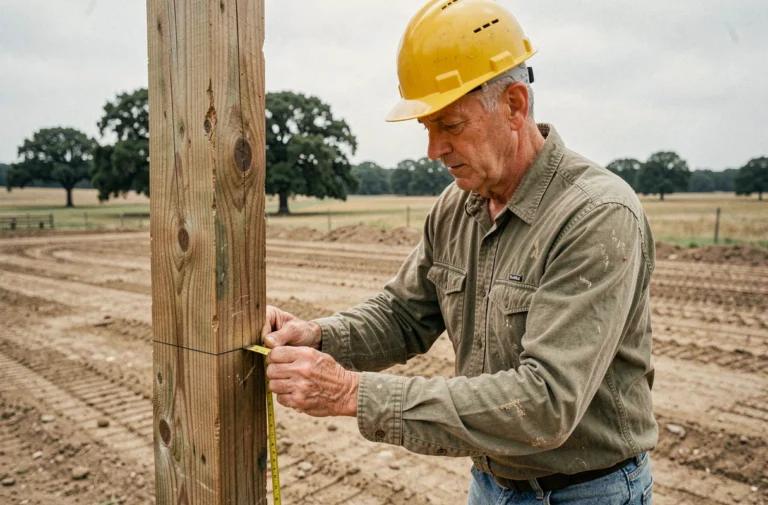
A harmonious garden does not rely on the quantity of plants or the size of the land. It depends on the coherence between the soil, the local climate, the planted volumes, and the materials used to structure the space. This coherence is worked on from the initial plan, before any planting, by defining functional areas and clear circulation lines.
Drought-resistant plant palette: the foundation of a sustainable garden
The choice of plants determines the longevity of the garden much more than the decorative style. A bed composed of species unsuitable for the soil or local water regime requires constant watering and frequent replacement. The result quickly resembles a temporary decoration.
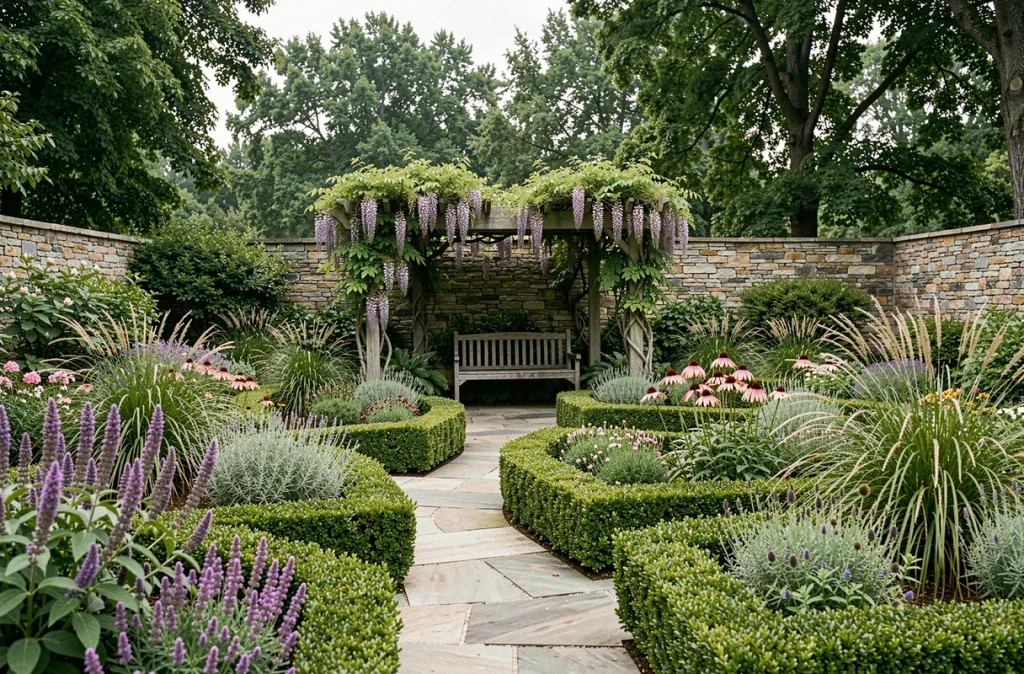
Favoring species adapted to dry soils changes the game. Ornamental grasses (fescues, stipas, miscanthus) bring movement throughout the year and tolerate prolonged dry periods. Evergreens like rosemary, lavender, or cistus provide visible structure even in winter.
The winter interest is a criterion often overlooked. A garden designed solely for spring and summer loses all readability for half of the year. Integrating plants with evergreen foliage, decorative bark, or grasses whose spikes dry elegantly ensures a garden readable in all four seasons.
In practical terms, combining three layers is enough to create depth: a low ground cover (creeping thyme, sedum), an intermediate layer (sage, perovskia), and one or two structural shrubs (olive, Judas tree). This layering works on a small area as well as on a large plot, with maintenance limited to two prunings per year.
Creating a garden with this logic of resilience is the approach advocated by Nos Jardins & Vos Paysages, placing suitable vegetation at the center of each outdoor development project.
Modular design for small gardens: structuring without heavy earthworks
When space is limited, the temptation is to fill every square meter. The opposite reflex produces better results: leaving voids, creating lines of escape, and structuring the space with lightweight elements rather than poured concrete.
The modular approach addresses this constraint. It involves delineating areas using raised planters, low walls, and trellises that can be placed, moved, and adapted over the seasons. A change in ground covering (gravel to slabs, wood to stone) is enough to mark a transition between a dining area and a bed, without costly earthworks.
Elements to combine for a functional small space
- Raised beds in wood or corten steel to plant at a good height and facilitate maintenance, even on a terrace or poor soil
- A vertical trellis against a party wall to accommodate climbing plants (star jasmine, clematis) and gain plant volume without encroaching on the ground
- A narrow pathway marked by a simple change in level or material, which guides the eye and visually enlarges the garden
- Spot lighting at ground level (low bollards, recessed spots) to extend the use of the garden in the evening and reveal the textures of the plants
This approach also works for tight budgets. Laying crushed gravel costs a fraction of the price of a concrete slab, and a treated pine planter lasts several years with minimal maintenance.
Landscaped garden plan: design before planting
A garden that appears natural almost always results from a plan drawn up in advance. This plan does not need to be complex. A scaled sketch on graph paper, with the dimensions of the land, solar orientation, and existing water points, is enough to avoid placement errors.
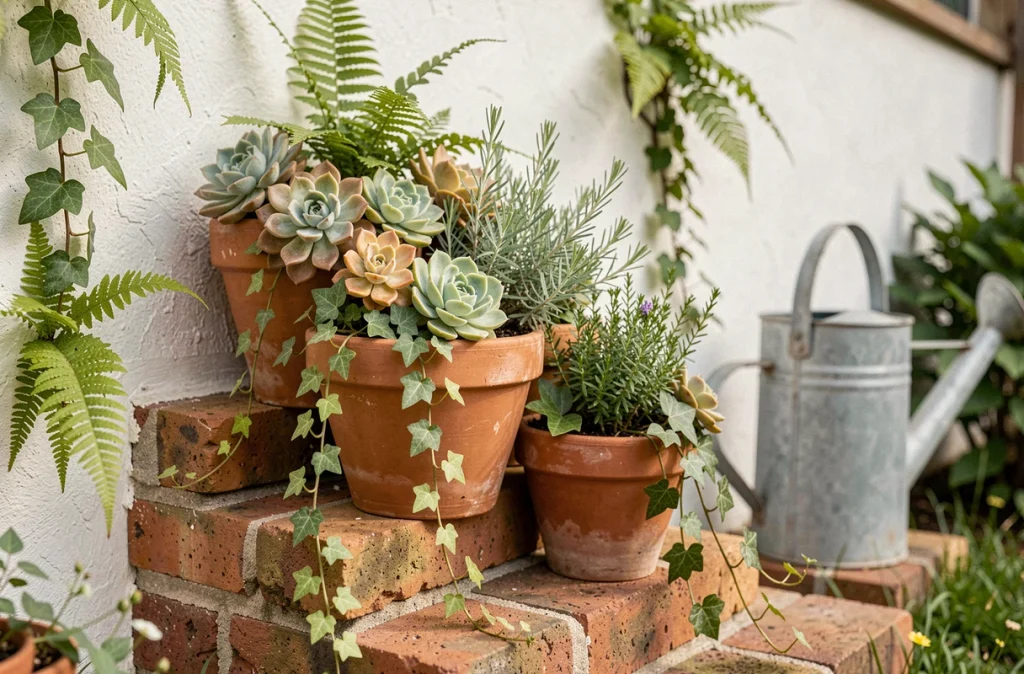
The first reflex is to identify the shaded and sunny areas throughout the day. A full-sun plant placed in the shade of a north wall will not thrive, no matter how much care is given. Placing light-hungry beds on the south or west side and reserving shaded areas for ferns, hostas, or heucheras avoids replacements the following season.
The second point: circulation. A garden without a defined path encourages users to trample on the plantings or to navigate around the beds randomly. Materializing a main pathway, even with simple stepping stones, organizes the view and movements.
Water and irrigation: plan from the start
Integrating water management from the initial plan reduces long-term consumption. A rainwater harvesting system connected to a drip irrigation system covers the needs of the most demanding beds without resorting to the mains. Grouping plants by similar water needs (the principle of hydrozoning) avoids overwatering drought-tolerant species to satisfy a single demanding plant.
Regarding materials, permeable coverings (gravel, cellular slabs, mineral mulch) allow water to infiltrate at the base of the plantings instead of running off into the street. This choice reduces the need for watering and protects the soil from erosion.
Materials and outdoor lighting: what makes the difference between a “catalog” garden and a true living space
The trap of the catalog garden often lies in the uniformity of materials: all gray composite, all white gravel, or all identical exotic wood. Mixing two to three materials is enough to create contrast without falling into accumulation.
A terrace made of wooden planks bordering a bed surrounded by local dry stones, with a pathway in stabilized gravel, produces a readable and coherent variety of textures. The main criterion is the local origin of the material: a stone extracted from the region integrates better visually and costs less in transport.
- Class 4 wood (treated pine, black locust) for terraces and planters: resistant to moisture without heavy chemical treatment
- Local natural stone for borders and low walls: natural patina over the years
- Crushed gravel or mineral mulch for paths and base of beds: draining, economical, easy to replenish
Outdoor lighting plays an underestimated structuring role. A few low bollards along a pathway or a spotlight directed at a remarkable tree transform the perception of the garden as night falls. The lighting does not serve to illuminate everything but to highlight volumes and guide footsteps.
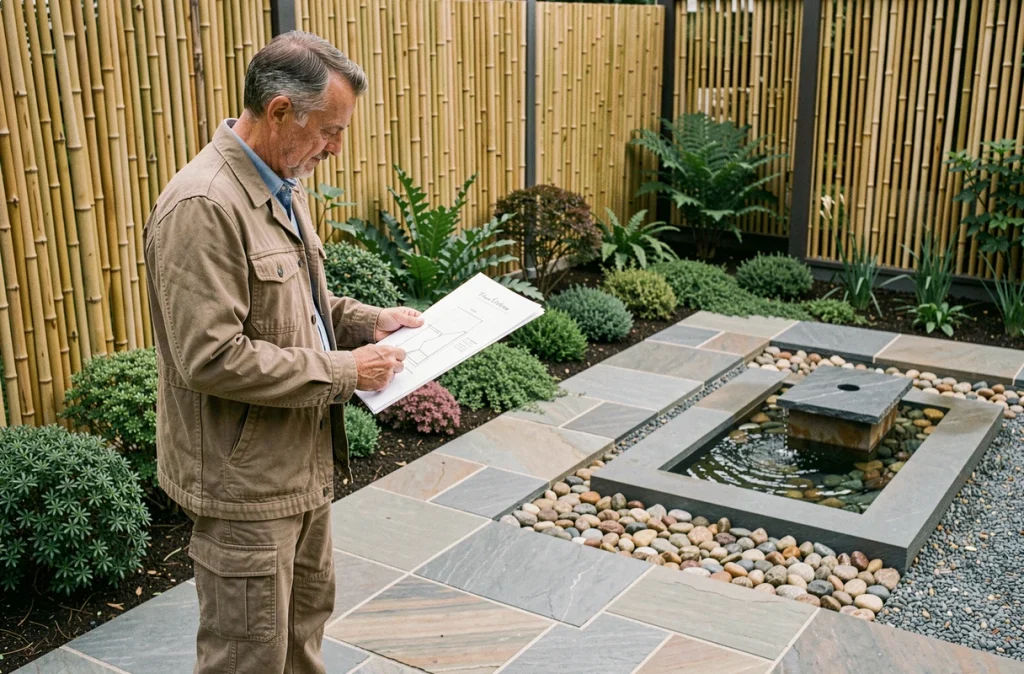
A garden that works on a small surface, with little water and a controlled budget, relies on three decisions made in advance: plants adapted to the actual climate of the land, a plan that respects shaded areas and circulation, and local materials that age well. The rest, decorations and accessories, come to complement an already solid framework.