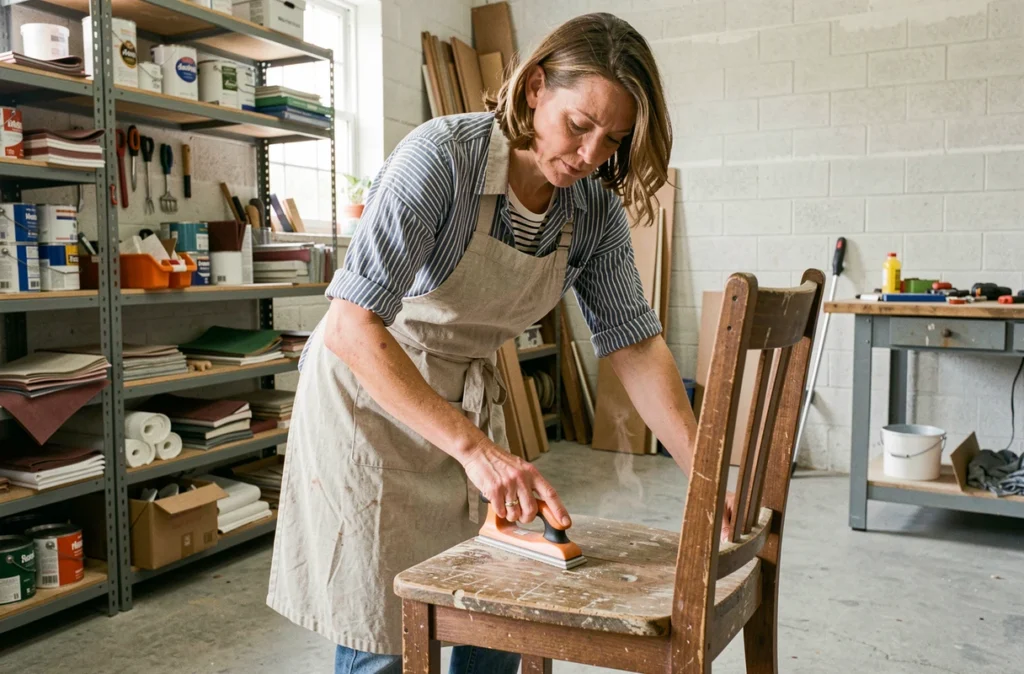
Recycling an old piece of furniture is not just about simply leaving it on the sidewalk or tossing it into a mixed waste bin. The term encompasses several distinct operations: reuse (putting the item back into circulation as is), repurposing (recovering parts or components), and material recycling (shredding, separating, transforming). Each piece of furniture, depending on its condition and composition, follows a different path.
Composite or damaged furniture: the link that traditional channels struggle to absorb
A solid oak piece of furniture will find a buyer at a recycling center without difficulty. The problem arises with furniture made from multiple materials: melamine particle boards, metal inserts, glued glass, polyurethane foams, plastic legs. These combinations make manual sorting lengthy and costly.
Recycling centers have material flow dismantling workshops. Instead of treating composite furniture as a homogeneous block, they separate wood, metal, glass, foam, and textiles to direct each fraction to the appropriate channel. The shredded wood is used to make new particle boards, metals go to foundries, and foams can become acoustic or thermal panels for buildings.
When a piece of furniture is too bulky to be transported and too damaged to be donated, the waste disposal site remains the default destination. You can find responsible advice from Espress Home detailing drop-off points based on your geographic location. On-site, a bin dedicated to used furniture helps direct these bulky items to specialized sorting centers rather than to landfill.
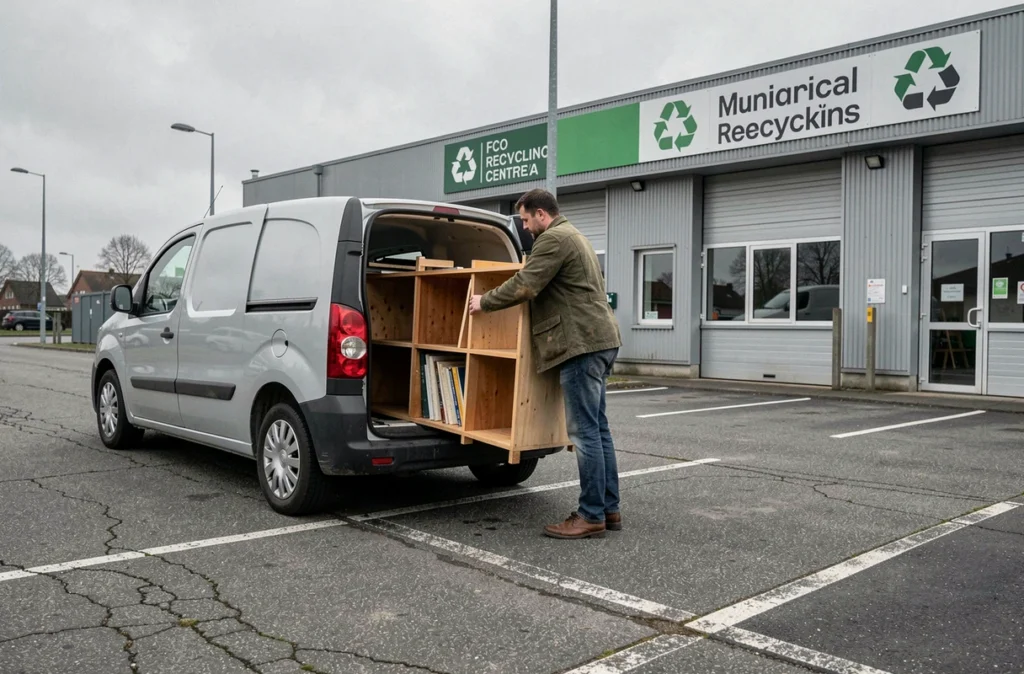
REP furniture channel: how furniture recycling is organized in France
Furniture recycling is based on the principle of extended producer responsibility (REP). Manufacturers and distributors fund the collection and treatment at the end of life through an approved eco-organization. This organization explains why specific bins appear at waste disposal sites: they are funded by this eco-contribution included in the purchase price.
The channel does not only concern used furniture from individuals. Article L.541-15-8 of the Environmental Code requires companies to prioritize reuse, repurposing, or recycling of unsold non-food new products. This obligation applies to products covered by a REP channel since 2022 and to other products since 2023.
Specifically, a sofa dropped in a bin follows this path:
- Transport to a sorting center where it is dismantled mechanically or manually depending on its complexity
- Separation of materials by flow: wood, foam, textile, metal springs, plastic
- Direction of each flow to a recycling unit or, if not possible, to energy recovery (transformation into solid recovered fuel)
Mattresses follow a similar circuit: sanitization, dismantling, then recovery of foams and springs. Recycled mattress foams are used to produce tatamis or insulation, illustrating the diversity of possible outlets.
Local reuse: recycling centers and actors in the social and solidarity economy
Donating furniture in good condition increasingly relies on a structured territorial network. Recycling centers, reuse shops, and associations like Emmaüs or Envie no longer function as simple occasional collection points. They form an organized reuse chain linked to the social and solidarity economy (SSE).
Their role goes beyond simple redistribution. These structures check, clean, and sometimes repair furniture before putting it back into circulation. A sideboard with a broken hinge will be repaired in the workshop rather than rejected.
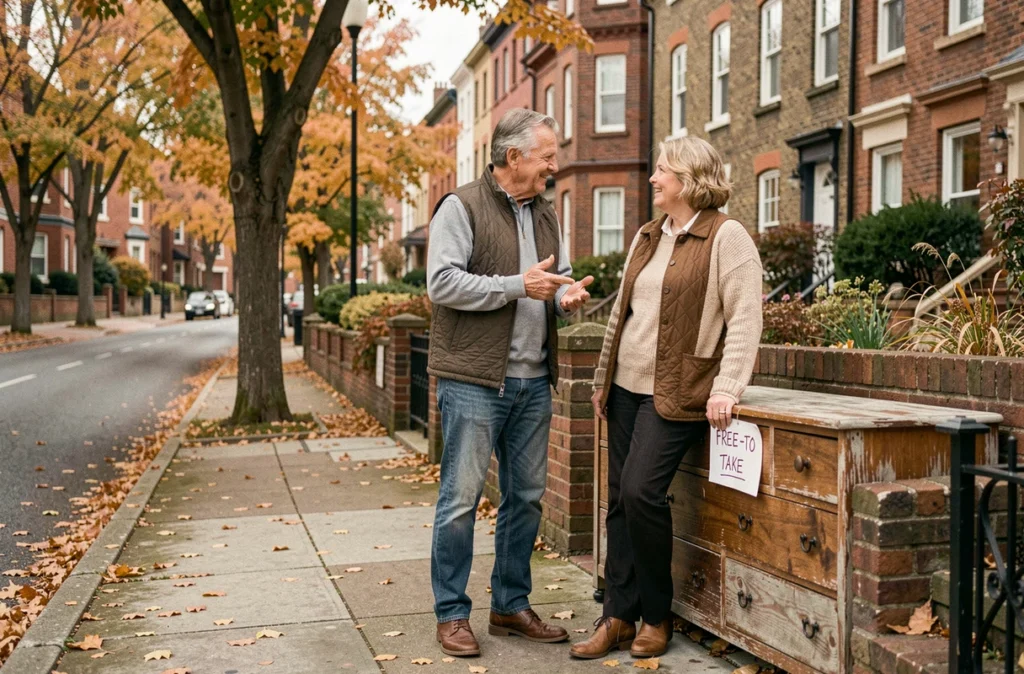
The main limitation remains local availability. Depending on the area, the offer for take-back varies significantly. In rural areas, some associations organize home collection rounds, but the frequency depends on available resources. Before loading a piece of furniture into a vehicle, checking with the organization if they accept the type of furniture concerned avoids unnecessary trips.
What recycling centers generally refuse
- Furniture soaked with moisture or showing mold (health risk for beneficiaries)
- Heavily stained or infested sofas or mattresses, which cannot be sanitized at a reasonable cost
- Furniture made from water-damaged particle boards, whose structure is irreparably compromised
For these cases, dropping off at the waste disposal site in the furniture bin remains the most suitable solution, as it ensures transport to the material recycling channel.
Transforming a piece of furniture before throwing it away: when reuse involves modification
Between donating as is and the recycling bin, there is an intermediate step rarely exploited: partial transformation. A solid piece of furniture too large for a current interior can be cut and reassembled into smaller pieces. The boards from a raw wood wardrobe become wall shelves, and an oversized table top is transformed into a desk.
This approach has practical value when the wood is of good quality but the shape of the furniture no longer suits any use. Recovering the material rather than the object extends the lifespan of the wood without going through industrial shredding.
Melamine particle board, on the other hand, does not lend itself well to artisanal cutting: it crumbles, does not sand cleanly, and releases glue dust. For this type of material, industrial recycling through the REP channel remains more relevant than a DIY transformation attempt.
The sorting between what deserves to be transformed and what should go to the channel thus depends on the original material. A solid wood piece of furniture, even damaged on the surface, retains exploitable material value on a domestic scale. A deformed particle board piece has none: its only valorization comes through shredding and reintegration into an industrial circuit.