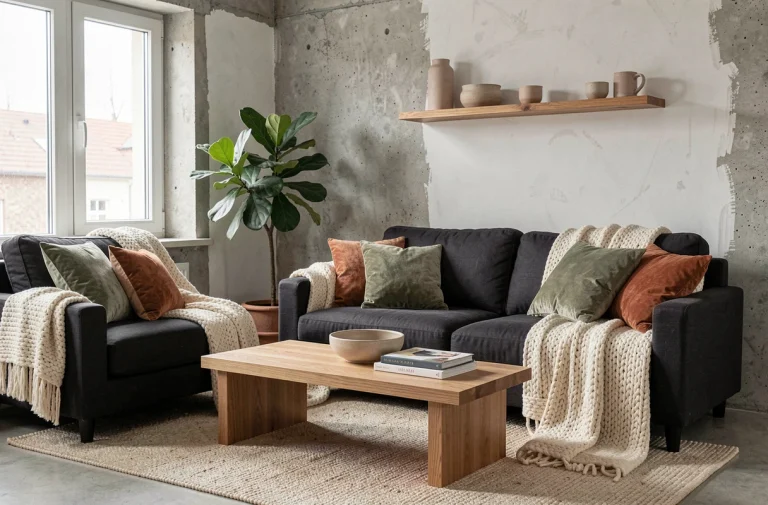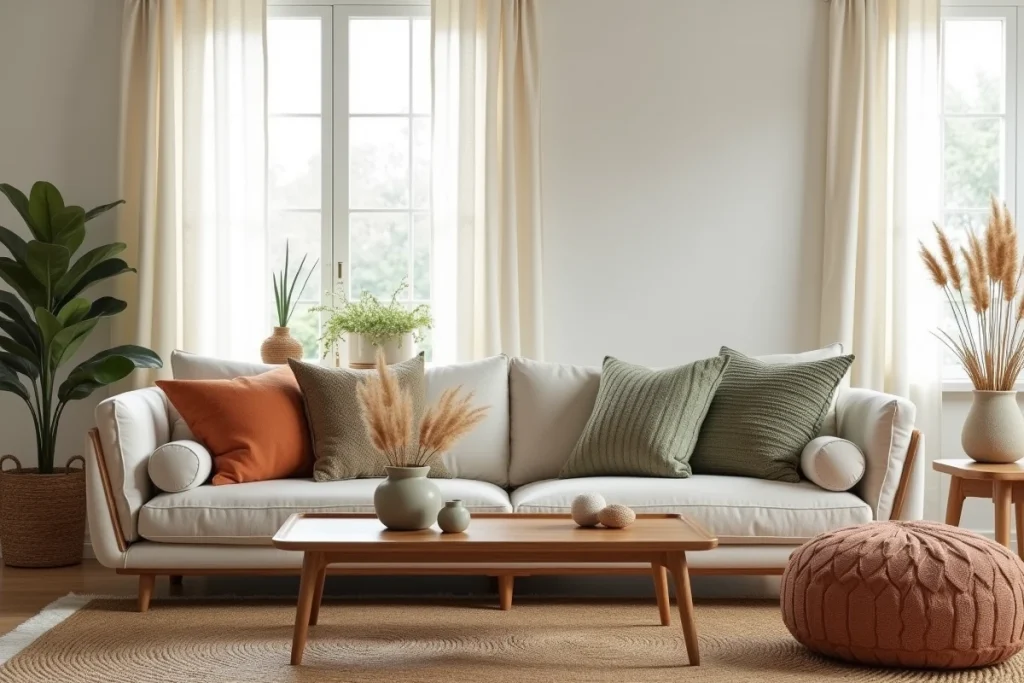
Off-white replaces pure white as the base for composition, brass dethrones chrome in lighting fixtures, and brown wood supplants blonde wood in seating and storage. These three material shifts summarize the ongoing decor trend: more enveloping, textured, and less clinical interiors. Transforming a space with style today requires mastering these new codes rather than multiplying accessories.
Warm neutral palette and Cloud Dancer: the technical foundation of a coherent interior
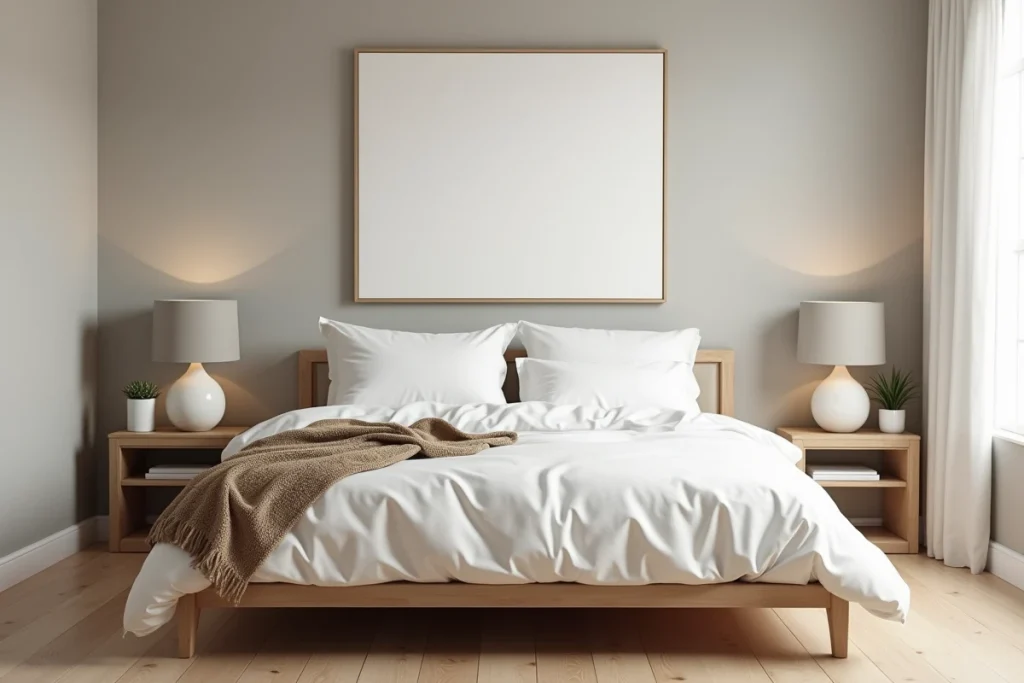
Pantone has designated Cloud Dancer (PANTONE 11-4201) as the color of the year 2026. This soft, luminous white is far from the cold white of a gallery. It absorbs natural light without reflecting it harshly, altering the perception of volumes.
We recommend using it as the main wall background, then layering warm shades in a monochrome palette: sandy beige, muted terracotta, light brown. This layered approach avoids the “total look” monochrome effect produced by poorly calibrated neutral palettes.
The choice of base white conditions everything else. A white that is too bluish makes brown woods appear grayish under LED lighting. Cloud Dancer, with its ivory undertone, naturally enhances brass finishes and dark woods. This is a technical point that trend articles rarely mention: the temperature of your white dictates the chromatic coherence of the entire room.
To explore concrete associations between wall shades and furniture, the decor universe of Les Embellies Déco offers compositions that illustrate this principle of tonal layering well.
Brass finishes and brown wood: balancing trend and durability
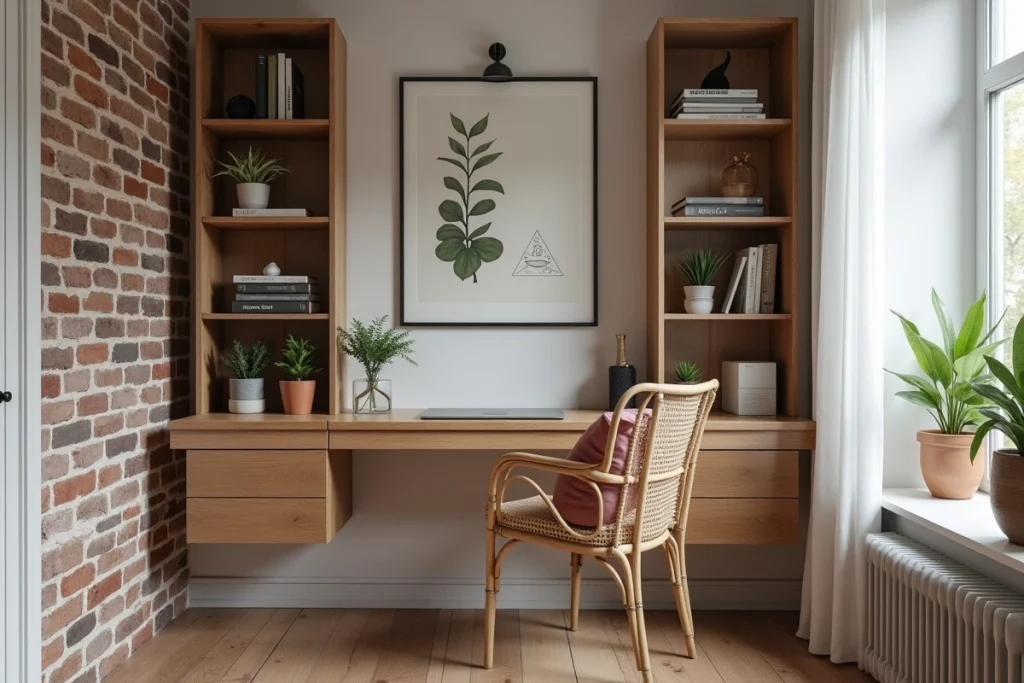
A large majority of design professionals now favor brass over chrome and brown wood over blonde wood for interior finishes. This shift is not just aesthetic. It responds to a logic of material aging.
Brass develops a patina over time. A solid brass light fixture gains character after a few years, while a pitted chrome fixture simply looks worn. Brown wood (walnut, smoked oak, stained beech) better conceals everyday micro-scratches than light blonde wood.
Selection criteria for durable finishes
- Prefer solid brass or brushed brass over brass-plated steel, which chips at the surface after a few months of heavy use
- For brown wood, check the color in the mass (not just the surface): a stained veneer reveals the light wood at the slightest impact
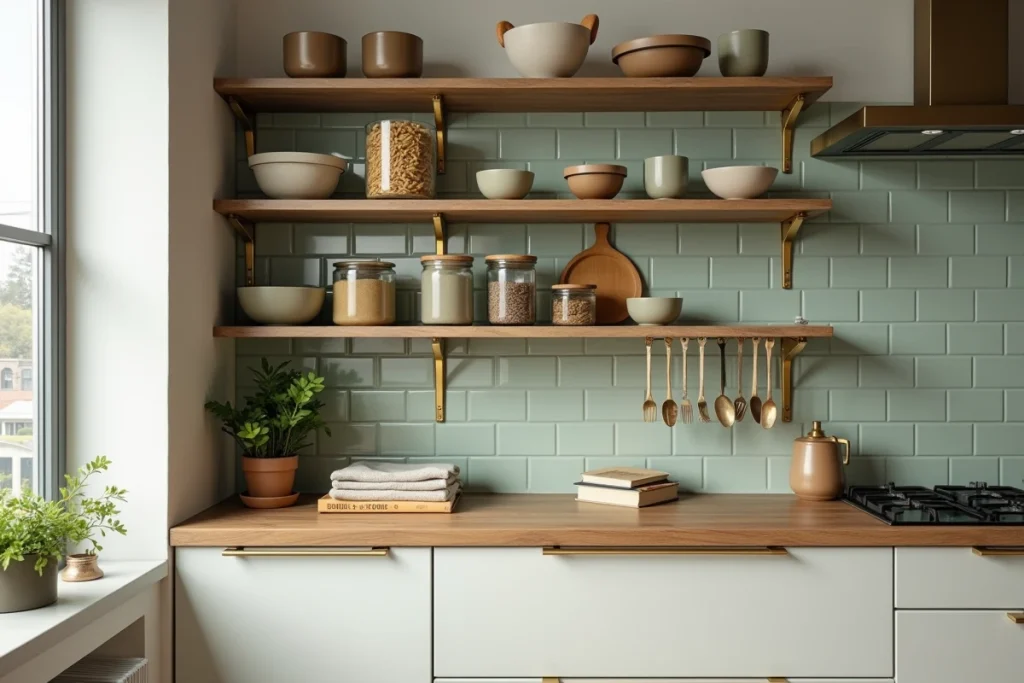
- Combine both materials on the same visual plane, for example, a walnut shelf with brass fixings, to create a material guideline in the room
- Avoid mixing chrome and brass in the same space: the temperature contrast (cold/warm) disrupts coherence
These finishes work particularly well in the living room and dining area, where light sources play on reflections. In a bathroom, brass requires anti-oxidation treatment if ventilation is insufficient.
Discrete technology and clean surfaces: rethinking layout through subtraction
The 2026 layout trends confirm a principle we have been applying for several seasons: the most effective technology in decoration is the one that disappears. Automatic adaptive lighting, voice commands integrated into walls, smart detectors for air quality – these devices are no longer visible gadgets placed on furniture.
Their integration changes the way we think about space. A living room without a visible floor lamp, illuminated by embedded LED strips with variable temperature, frees up floor space and simplifies the necessary furniture.
What invisible tech concretely changes
Antibacterial countertops and integrated air purification systems eliminate the need for devices placed on surfaces. The result: kitchens and offices where every visible object is a deliberate decorative choice, not a functional constraint.
Decorating through subtraction rather than accumulation requires more rigorous upfront work. It involves anticipating cable runs, planning technical niches, and choosing finishes compatible with embedded sensors. The initial investment is higher, but the visual result is incomparably clearer.
Colors and patterns: balancing boldness without compromising readability
The return of warm colors and bold patterns (wide stripes, geometric patterns, botanical prints) does not mean saturating every wall. The most reliable distribution rule remains the background/accent ratio.
- The background (walls, floor, large surfaces) occupies the majority of the visible area and stays within the warm neutral palette described above
- The accents (cushions, curtains, a wall section, a rug) carry the strong color or pattern
- The transitions (baseboards, frames, shelves) take on an intermediate tone to avoid a harsh visual break
A living room where the sofa, curtains, and rug are all in different saturated colors produces quick visual fatigue. Limiting bright colors to a maximum of two focal points per room preserves the eye’s energy and gives more impact to each choice.
Patterns operate under the same logic. A large-pattern wallpaper on a single wall structures the space. The same pattern on four walls overwhelms the volume. We observe that the most successful interiors play on a scale contrast: a large wall pattern paired with solid textiles, or vice versa.
The transformation of an interior relies less on the number of objects added than on the rigor of the initial choices. A coherent chromatic base around Cloud Dancer, selected brass and brown wood finishes for their aging, technology that recedes in favor of surfaces, and precisely dosed color accents: these four levers are enough to create a space that endures, without the disposable trend effect.