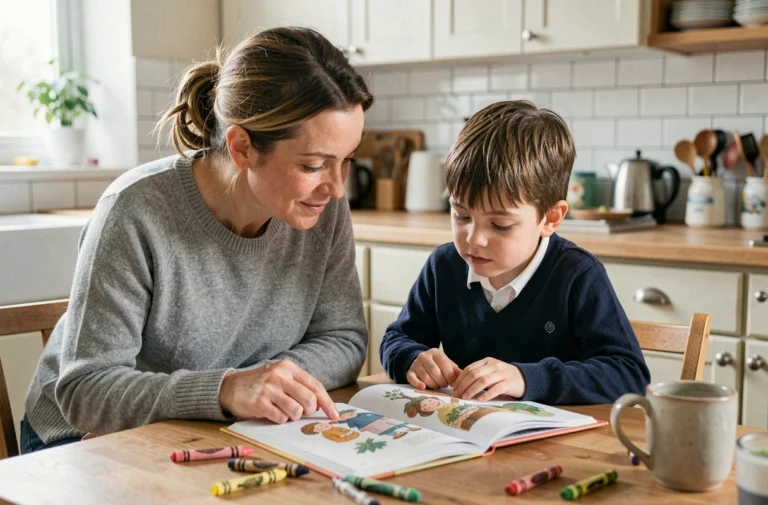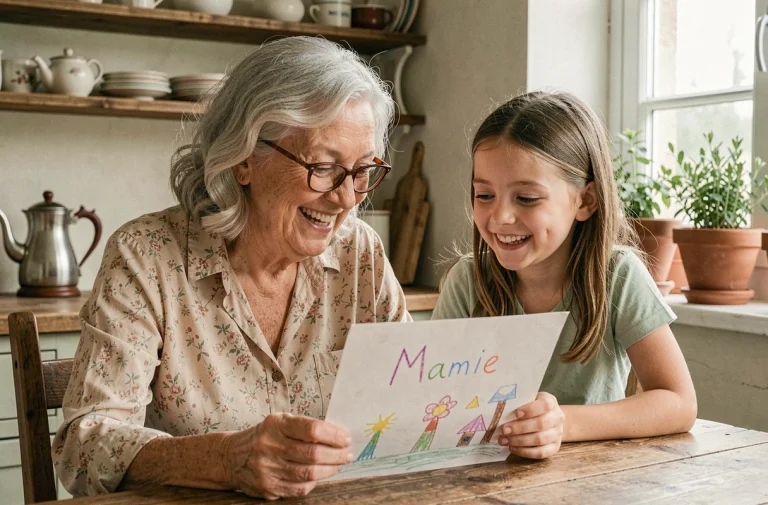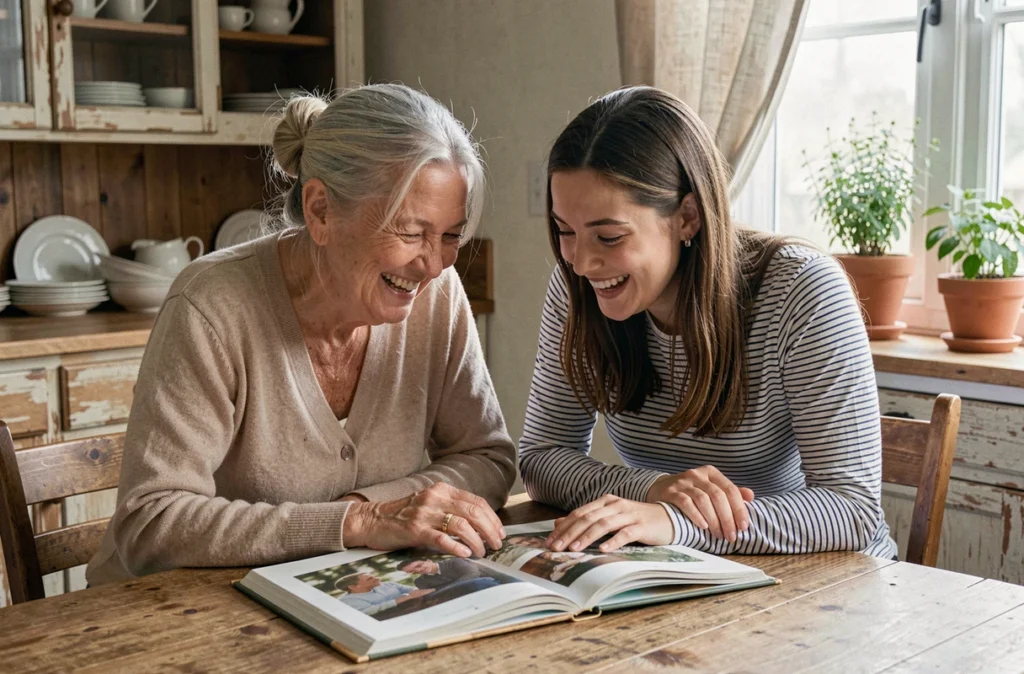
Intergenerational connection refers to the quality and frequency of interactions between members of the same family from different age groups: children, parents and grandparents. Strengthening these bonds between generations goes beyond holiday meals.
Social isolation and loneliness are two distinct realities: an older person may receive regular visits and still feel that they don’t matter to anyone. This distinction, highlighted by people involved in the MONALISA network, invites families to rethink how they maintain their relationships.
Social isolation and loneliness among older adults: understanding the difference
More calls or visits are not always enough. The number of people available to make contact says nothing about the feeling of being recognised and mattering to someone. A grandparent who receives a scheduled weekly phone call may feel lonelier than someone who shares a hands-on activity with a neighbour once a month.
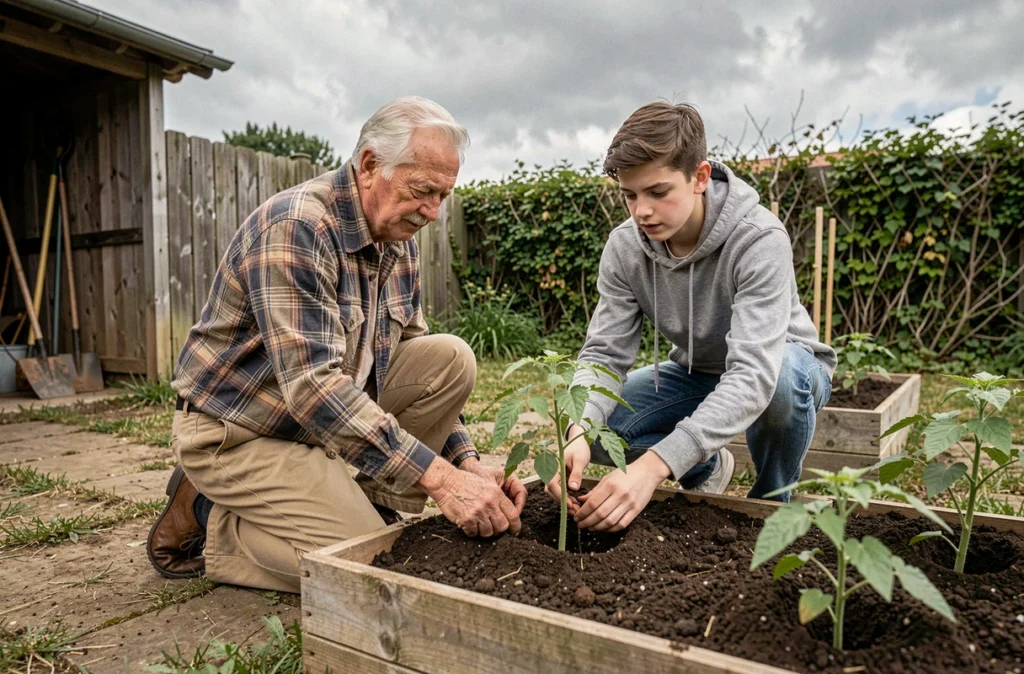
This distinction changes how we approach family relationships. Before trying to increase the frequency of contact, it’s worth asking older family members what kind of interaction they enjoy. Some prefer a long, quiet conversation; others would rather work on a shared project, such as gardening, cooking or sorting through photos. Tailoring the way you connect to the individual has a greater impact than simply ticking off a visit.
The resources available in IDEOSENIOR’s family section explore these questions from several practical angles, from everyday family life to support services.
Distance and reduced mobility: maintaining intergenerational connections from afar
Families living far apart and older adults losing their mobility are the two most common obstacles to regular visits. When travelling by car or train becomes difficult, connections can become less frequent and eventually fade away.
Digital tools suited to older adults
Video calls can partly make up for not being together in person, provided the technology is accessible. Simplified tablets with large-icon interfaces are available for people who are less comfortable with technology. Digital support can also come from outside the family: in Poitiers, an assisted-living residence launched a scheme in which students living there at a reduced rent spend a few hours each week with older residents, including helping them use digital technology.
Regular rituals instead of occasional visits
A short but predictable interaction—a call every Wednesday or a photo sent every Sunday—creates more continuity than a multi-day visit once a year. A regular ritual gives older adults a sense of time and the feeling that someone is looking forward to seeing them.
- A set time each week, even for just fifteen minutes, makes the relationship part of everyday life.
- Regularly sending children’s drawings, tried-and-tested recipes or photos of the garden keeps a tangible connection between generations.
- Handwritten letters, often overlooked, provide something physical that older adults can reread and keep.
Intergenerational cohabitation: a practical way to bring young people and older adults closer
Living under the same roof is the most direct way to connect generations, but it requires clear ground rules. Good intentions alone don’t guarantee a successful living arrangement. The Ensemble2générations association, for example, assesses expectations and hosting arrangements, helps establish rules for living together and follows up with senior-student pairs.
This type of scheme addresses two problems at once: isolation for an older homeowner and housing difficulties for a young person. For older adults considering renting a furnished room in their main home to a young person, the tax exemption available subject to certain conditions has been extended until 31 December 2026. Whether it will be maintained beyond that date remains an important issue for families interested in this model.
Cohabitation is not the only option. In Poitiers, housing students in the same assisted-living residence as older adults, without sharing an apartment, creates a practical intergenerational community. People connect in shared spaces, at a pace that suits everyone.
Intergenerational connections in the neighbourhood: looking beyond the family
Connections between generations don’t happen only within families. Neighbourhood initiatives can complement or even make up for the absence of nearby relatives.
In Mérignac, the MONALISA partnership brings together the city, CCAS, associations and volunteers to run several initiatives:
- Regular friendly visits to older people experiencing isolation.
- Home delivery of books and help getting around for everyday outings.
- Intergenerational activities that bring young volunteers together with older people in the neighbourhood.
This kind of local network gives older adults a diverse range of contacts. For families who live far away, knowing that local support is available is reassuring and complements long-distance communication.
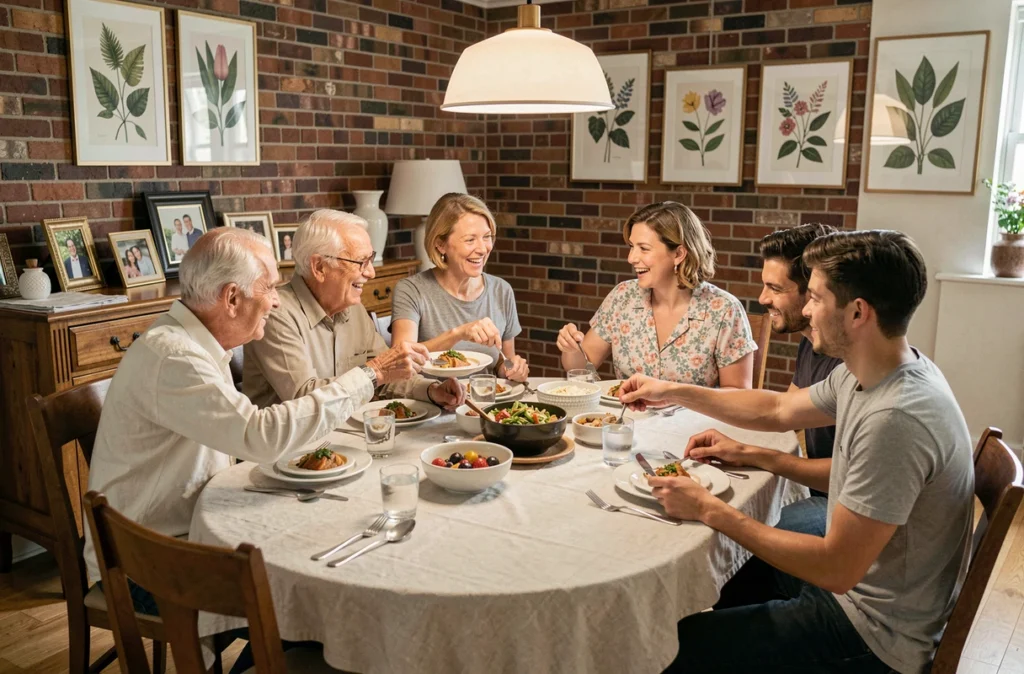
Activities shared across generations: choosing what creates genuine interaction
Not all intergenerational activities are equally valuable. Watching television together in the same room doesn’t have the same effect as working on a project to which everyone contributes a skill. The most effective activity is one in which the older person can pass something on: a recipe, a DIY technique, a family story or a regional language.
The Les Talents d’Alphonse platform is based on the idea that retirees have knowledge to share. It connects older people in the neighbourhood with families around music, photography, languages and sewing. This model works because it puts older adults in the role of contributors, not passive recipients.
The Lire et faire lire association brings together thousands of volunteers over the age of 50 who visit schools to share the joy of reading. Intergenerational connections are built here outside the family, but children develop a natural rapport with older adults that they then carry into their own families.
The choice of activity depends on everyone’s physical and cognitive abilities. A cooking workshop may suit an older person who is mobile, while exchanging illustrated letters can work even when mobility is severely limited. The goal remains the same: for each generation to leave the encounter with something they didn’t have before.