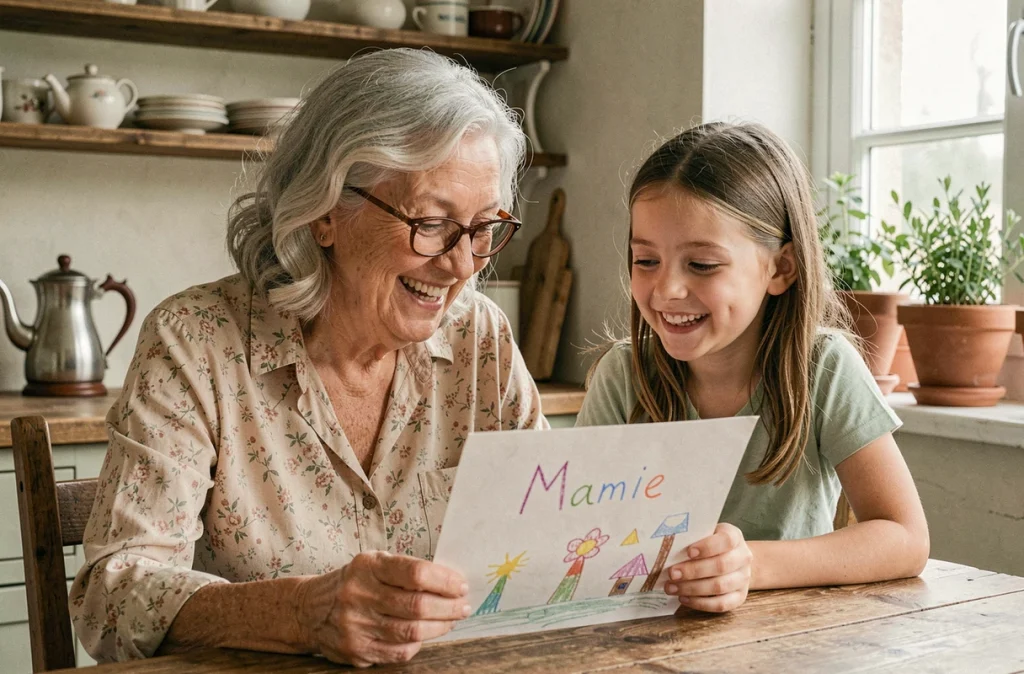
The word “grandma” remains the most common nickname for a grandmother in France. However, an increasing number of grandmothers reject this term, considering it too clichéd or too uniform. Finding another name than grandma to call one’s grandmother then involves a balancing act between affection, sound, and personal identity.
According to available data, in more than half of the cases, it is the grandparents themselves who choose their nickname, often to avoid a term they perceive as outdated.
Who really decides the grandmother’s nickname in a family
The question of the nickname does not always arise at the same time. Some families think about it as soon as the pregnancy is announced, while others let the child decide through their first attempts at pronunciation.
In more than half of the cases, it is the grandparents who impose their nickname. They take the lead over the parents and grandchildren, who only intervene in about a quarter of situations. The rest involves a collective discussion, a sort of family negotiation where everyone proposes without anyone having the final say.
This power dynamic explains why so many grandmothers actively seek an alternative name to grandma even before the birth. The challenge is to establish a nickname that fits their personality, not to endure a generic term.
The grandchildren, on the other hand, produce unexpected results. A poorly articulated “grandma” becomes “mamé,” “mouna,” or “maminé,” and the nickname sticks. These phonetic accidents sometimes create the most enduring names, precisely because they were not calculated by anyone.
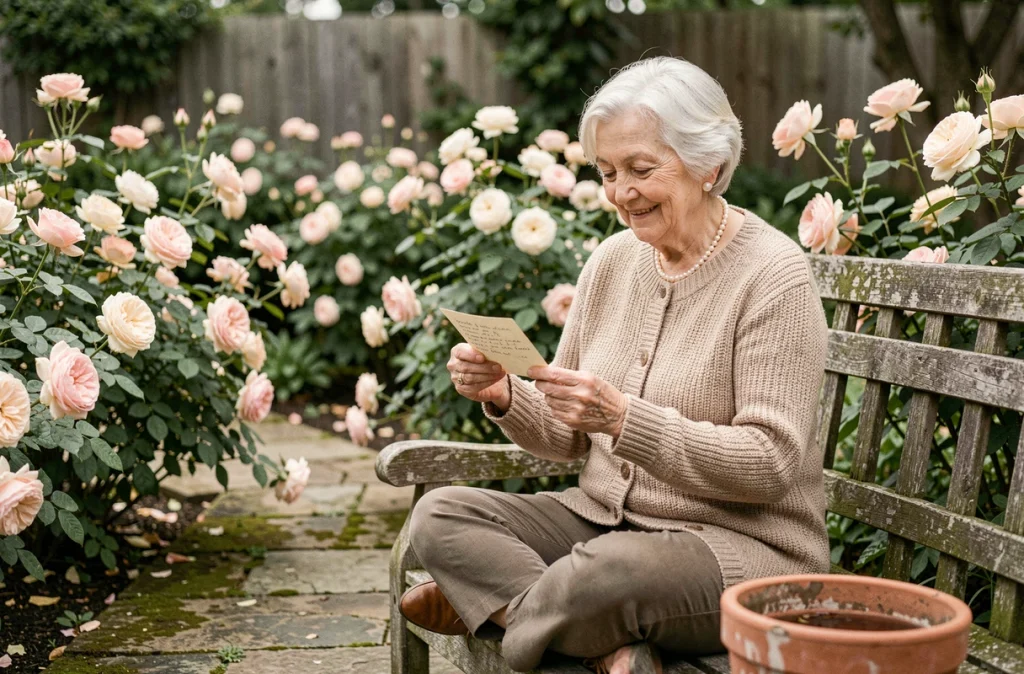
Grandmother nicknames derived from first names or personal diminutives
The most noticeable trend in recent years is to create the nickname from the grandmother’s first name. The result sounds personal and avoids confusion when the child has two grandmothers.
Laura Smet revealed in August 2026 that her son Léo called Nathalie Baye “Lilie” instead of “grandma.” This type of construction, a diminutive derived from the first name or a familiar syllable, illustrates a shift towards individualized nicknames.
The process is simple: take one or two syllables from the first name, sometimes adding an affectionate suffix. A Françoise becomes “Fanette,” a Catherine “Cati,” an Isabelle “Babelle.” The nickname works because it belongs to only one person.
When the nickname becomes a marker of identity
Helena Noguerra stated in July 2026 that her grandson called her “Mémé.” She described this choice as “punk and engaged,” far from the expected register for a public grandmother. A grandmother’s nickname can function as a personal claim, not just as a family habit passed down by default.
This identity dimension changes the nature of the choice. The nickname no longer serves solely to designate a family role. It says something about the person who bears it, about the relationship they want to build with their grandchildren.
Regional and foreign nicknames for calling one’s grandmother
Regional and foreign languages offer a reservoir of nicknames that classic lists underutilize. The appeal of these terms lies in their sound, often softer or more rhythmic than “grandma,” and their cultural anchoring.
- Mamou, Manou, Nanou: very common southern variants in the south of France, easy for a young child to pronounce and distinct enough from “mama” to avoid confusion.
- Nonna: an Italian term adopted by many French families of Mediterranean origin, which also works without a link to Italy thanks to its warm sound.
- Oma: the German and Alsatian version, short and punchy, appealing to grandmothers looking for a no-frills nickname.
- Abuela, Yaya, Babouchka: borrowings from Spanish, Greek, and Russian, rarer in France but marking a cultural openness or homage to family origins.
- Mamé, Mémé: old forms of French often perceived as outdated, but currently being rehabilitated by public figures who embrace them.
The choice of a foreign nickname raises a practical question: the child must be able to pronounce it easily between the ages of one and three. Two-syllable terms with open sounds (a, o, ou) work better than long words or complex consonants.
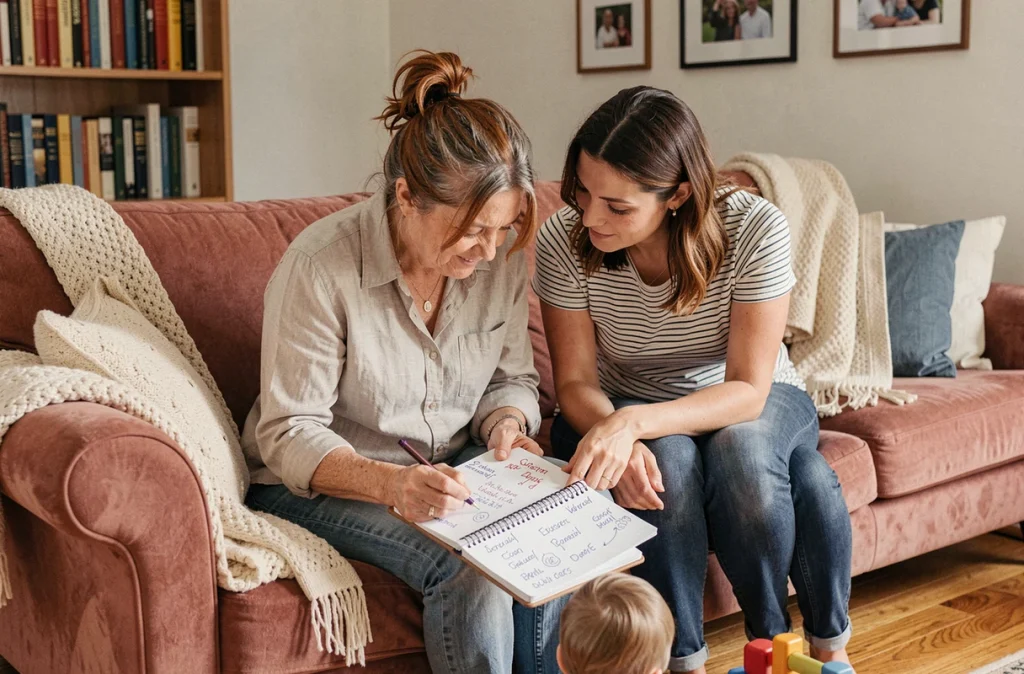
Retro names as a source of inspiration for an original nickname
Names like Colette, Suzanne, Madeleine, Marguerite, or Augustine are making a comeback in the name rankings in 2026. This resurgence of so-called “vintage” names spills over from the civil registry: these old names also inspire original grandmother nicknames.
A grandmother named Madeleine can become “Mado.” A Marguerite transforms into “Maguy.” The retro name, already carrying an emotional weight, lends itself naturally to a diminutive without seeming artificial.
The other avenue is to use an old name that is not that of the grandmother but evokes a family universe. Calling one’s grandmother “Léonie” or “Augustine” because it was the name of her great-grandmother creates a generational continuity. The nickname then becomes a thread between generations.
What the nickname says about the relationship
A nickname imposed by the grandmother before birth does not create the same bond as a nickname forged by the child through awkward repetitions. Both mechanisms coexist in most families, and opinions diverge on which creates the strongest attachment.
The nickname that lasts is often the one that no one really chose. It established itself through use, carried by the voice of a two-year-old who had not yet mastered all the syllables. The best grandmother nicknames rarely come from a list, but from a shared moment that the family collectively decides not to correct.