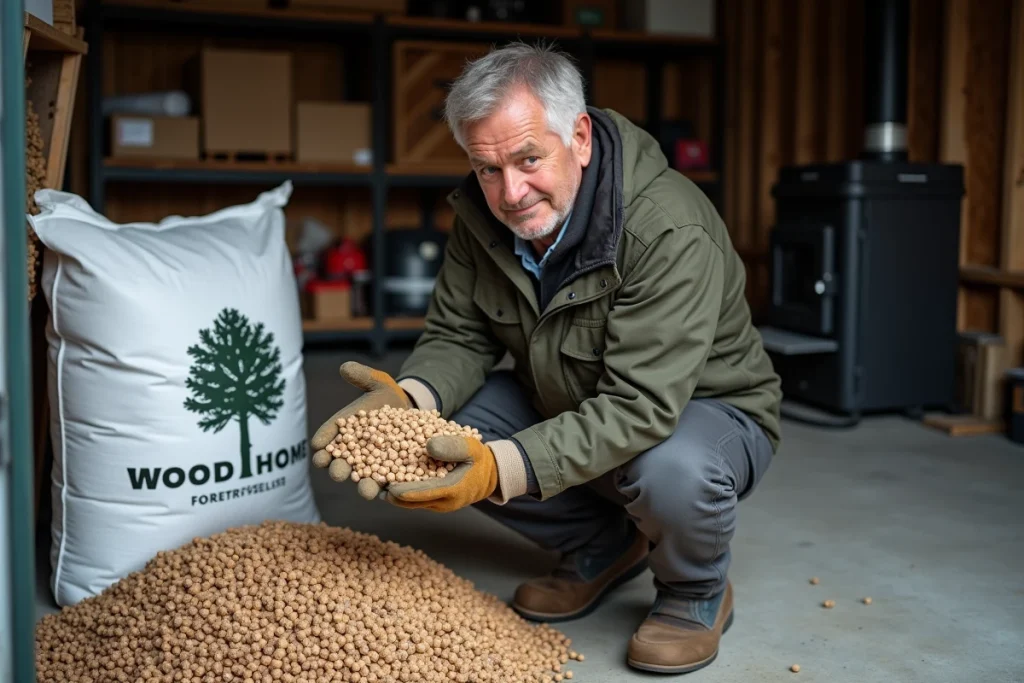
We received our first pallet of Piveteau pellets on a Tuesday morning in November, with a freshly installed pellet stove and no point of comparison. Three heating seasons later, we have a clear idea of what this pellet does well, its limitations, and especially what we would have liked to check before placing an order.
High-temperature drying of Piveteau pellets: what it changes in daily use
Piveteau Bois highlights a high-temperature drying process for its HP+ pellets. In practice, we found that failed ignitions are rare. The stove ignites quickly, and the flame stabilizes within a few minutes without needing to restart the cycle.
This drying pushes the residual moisture below the level announced by the brand (less than 6.5%). On a well-adjusted stove, this translates to a glass that stays clean longer and a less sooty burner between cleanings.
Feedback varies on this point depending on the stove model and the draft of the installation, but in our case (sealed stove, short flue), the difference with an entry-level pellet tested in parallel was noticeable from the first week. We gathered our reviews on Piveteau pellets after several months of regular use, and the observation on combustion consistency has not changed.
Fines and dust in the bags: the real test upon receipt
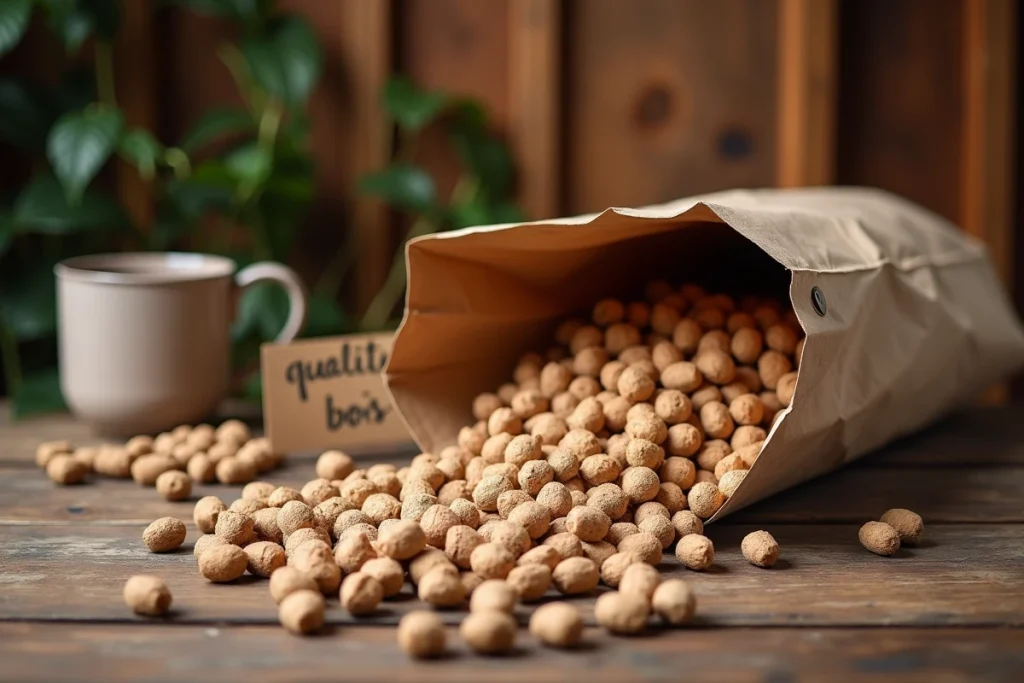
A pellet certified DINplus and ENplus is reassuring on the technical sheet. But the quality of a bag also depends on its handling. Of the three pallets received, two were impeccable. The third contained several bags with a bottom loaded with dust, likely due to less careful transport.
Before storing an entire pallet in the garage, we recommend a simple step: open one or two bags, pour the contents into a clean bucket, and observe the bottom. If the amount of fines (crushed particles, dust) exceeds a small handful, there is a storage or transport issue, not necessarily a manufacturing one.
What we check with each delivery
- The condition of the plastic film around the pallet: a punctured or torn film allows moisture to enter, even during a few hours of transport
- The bottom of two or three bags taken from different spots on the pallet (top, middle, bottom) to compare the fines rate
- The smell of the pellets: a pellet that smells musty or sour has absorbed moisture, regardless of the brand on the bag
Piveteau pellets and pellet stove maintenance: actual cleaning frequency
Piveteau announces a maximum ash content of 0.35%. In practice, we empty the ash pan once a week during continuous heating, compared to twice with a less efficient pellet tested the previous season. Less ash also means less sooting of the burner, which maintains good energy efficiency longer between maintenance.
Cleaning the glass remains necessary, but the interval extends. We wipe it with a damp newspaper every four or five days instead of every two days. It’s not spectacular, but over a full heating season, it represents time saved.
Chimney sweeping and technical follow-up
A good pellet does not exempt from an annual mandatory chimney sweeping. We found that the deposit in the flue was fine and dry with Piveteau, making it easier for the brush to pass through. The technician who works with us noted less tar compared to installations fueled with pellets made from hardwood-softwood blends.
Storing pellets in large quantities: the warning to know
Ordering a whole pallet is economical. But storing several hundred kilos of wood pellets in a closed space poses a problem that many buyers are unaware of. ANSES has reported that storing pellets in large quantities in a closed room can release carbon monoxide.
We are talking about unventilated garages, closed cellars, poorly ventilated basements. The risk concerns all wood pellets, not just Piveteau. The recommendation is simple: store in a dry and ventilated place, never in a living space or a confined area without air circulation.
Storage conditions that preserve quality
- A room protected from rain and direct moisture (no ground contact with the pallet without protection)
- Natural or mechanical ventilation to avoid gas accumulation
- Intact bags, without perforation, elevated on a wooden pallet or an aerated support
- A rotation of stock: use the oldest bags first to limit compaction and degradation of the pellets
Price of a Piveteau pallet: what the price doesn’t say
The price of a pallet of Piveteau pellets is in the high segment of the pellet market in France. We pay more than for some brands sold in supermarkets, but the consistency of quality compensates over time.
A cheaper pellet that clogs the burner faster generates additional maintenance costs. A damp bag that blocks the auger of the stove is a call for the technician. The real cost of a pellet is measured over a full season, not on the price per ton displayed in stores.
The wood pellet market in France has seen a relative stabilization of prices over several seasons, with a trajectory deemed more predictable than that of heating oil. In this context, locking in a reliable supplier like Piveteau allows for smoothing the heating budget without unpleasant surprises at delivery.
After three winters with these pellets, our assessment can be summed up in one sentence: the consistency of the product justifies the pricing position, provided that the condition of the bags is checked upon receipt and stored under good conditions. The stove runs better, cleaning takes less time, and we haven’t had to call the technician for a jam related to the fuel.