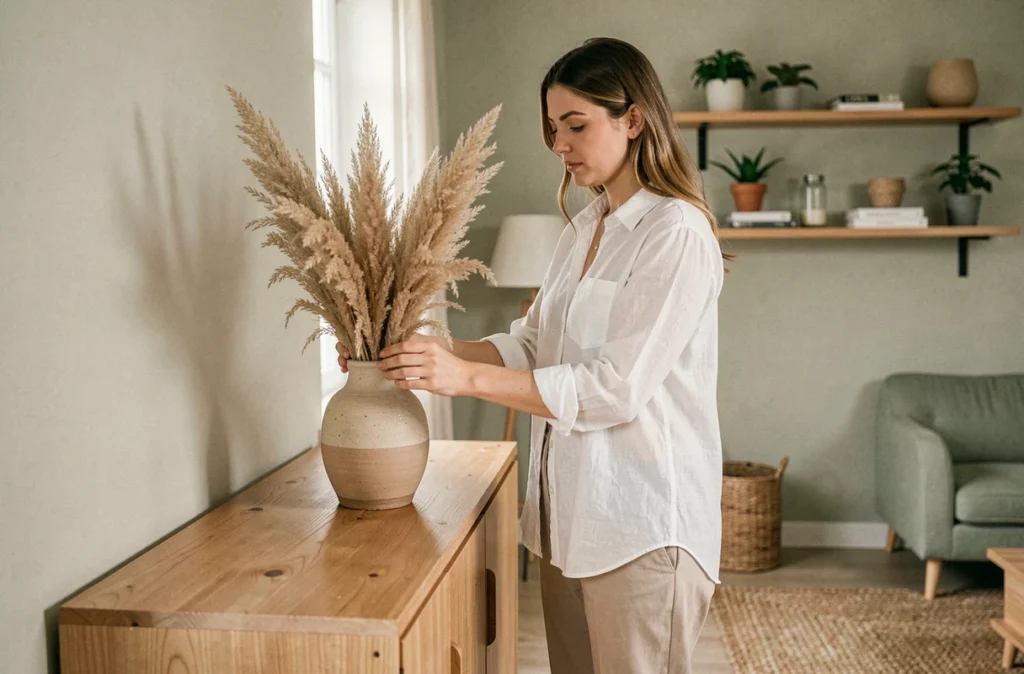
Improving your interior doesn’t necessarily require major renovations or a substantial budget. A few targeted interventions focused on lighting, materials, or furniture arrangement are often enough to transform the perception of a room. The starting point: identify what in your current living space hinders visual or functional comfort, then act on those specific elements.
Colour drenching: painting a room in monochrome to change the atmosphere
Colour drenching involves applying a single color to all surfaces of a room, from floor to ceiling, including moldings, door frames, and radiators. This technique, recognized since 2025 as an established trend validated by decoration professionals, creates an enveloping effect without multiplying decorative objects.
The benefits are twofold. First, monochrome visually unifies a space that may seem disjointed when too many shades coexist. Second, it simplifies the choice: a single paint reference, available in a matte finish on the walls and satin on the woodwork, is enough to give character to a living room or bedroom.
For a coherent result, favor highly saturated colors in small rooms (bathrooms, entryways) and more muted tones in larger spaces. Find more layout ideas among home advice on Les Conseils de Mélanie to explore these color choices based on your home’s configuration.

Natural and artificial light: two complementary levers to enlarge the space
Light alters the perception of volumes more than any piece of furniture. Before purchasing a light fixture, start by assessing what blocks natural light: overly thick curtains, tall furniture placed in front of a window, dirty glazing.
Increasing daylight in the living room and kitchen
Replacing opaque curtains with light sheers can radically transform the ambiance of a north-facing room. A mirror positioned opposite a window reflects light towards the back of the living room and gives an impression of additional depth.
In the kitchen, reflective surfaces (stainless steel backsplash, light countertops) serve the same purpose. Every clear or shiny surface becomes a relay for natural light.
Layering light sources in the evening
A single ceiling light creates flat lighting. To add dimension to your interior, combine at least three types of light sources in the same room:
- A diffuse general lighting (ceiling light, pendant) that ensures basic visibility without glare
- An accent lighting (table lamp, adjustable spotlight) that highlights a painting, a shelf, or a nook
- An ambient lighting (string lights, candles, warm temperature LED strip) that lowers the overall intensity and invites relaxation
The color temperature matters as much as the intensity. For living spaces, stay below 3,000 kelvins: warm light promotes relaxation, while cool lighting is better suited for a workspace or office corner.

Light zoning: creating a workspace without partitioning
Remote work has become a lasting habit. In France, about one in five private sector employees regularly works from home, averaging close to two days a week according to Insee data. This reality encourages the integration of a workspace into living areas rather than dedicating an entire room to it.
Light zoning relies on visual, not physical, separations. A change in flooring (a rug under the desk, for example), a low bookshelf, or a slatted partition is enough to mentally signal the transition to work mode.
The orientation of the desk also matters. Positioned facing a wall, it visually isolates. Turned towards the room but backed against a shelf, it creates a symbolic boundary without cutting off circulation. The brain identifies the workspace through these visual cues, facilitating concentration without sacrificing the living room space.
Materials and textiles: adding depth without cluttering
Adding decorative objects is not the only way to personalize an interior. The interplay of materials, often on a modest budget, brings a sensory dimension that color alone cannot create.
A boucle fabric sofa, a raw linen cushion, and a knitted wool throw placed together in the same living room create texture contrasts that the eye perceives as visual richness. This approach aligns with the current trend in interior design, which prioritizes sensory experience and unique expression over the accumulation of objects.
A few simple rules to avoid overload:
- Limit yourself to three dominant materials per room (wood, textile, metal, for example) to maintain visual coherence
- Vary textures within the same color palette rather than multiplying shades
- Refresh textiles (cushion covers, curtains, rugs) rather than furniture to update a space without a large investment
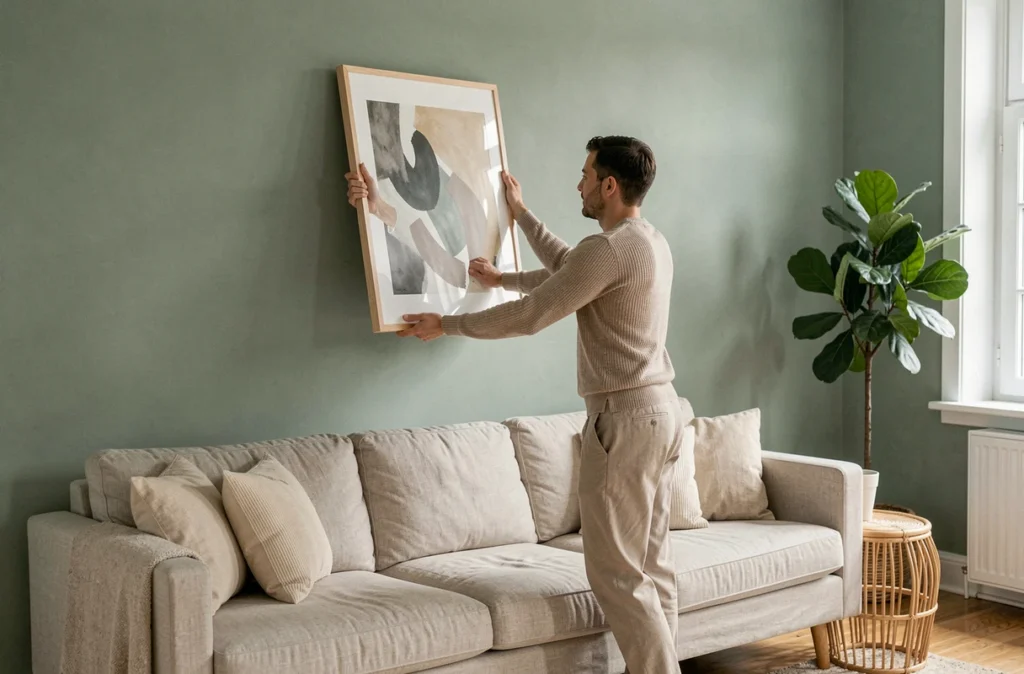
Changing textiles is one of the interventions with the best effort-to-result ratio. Replacing cushions and the sofa throw transforms a living room in an hour. It’s an underestimated lever compared to a complete rearrangement of furniture, which requires more time and logistics.
The last variable to keep in mind is circulation within the room. A beautiful arrangement loses its effect if the passage between the sofa and the coffee table requires contortion. Before each addition, check that the natural flow of movement in the room remains smooth: this detail distinguishes a visually pleasing interior from one that is pleasant to live in.