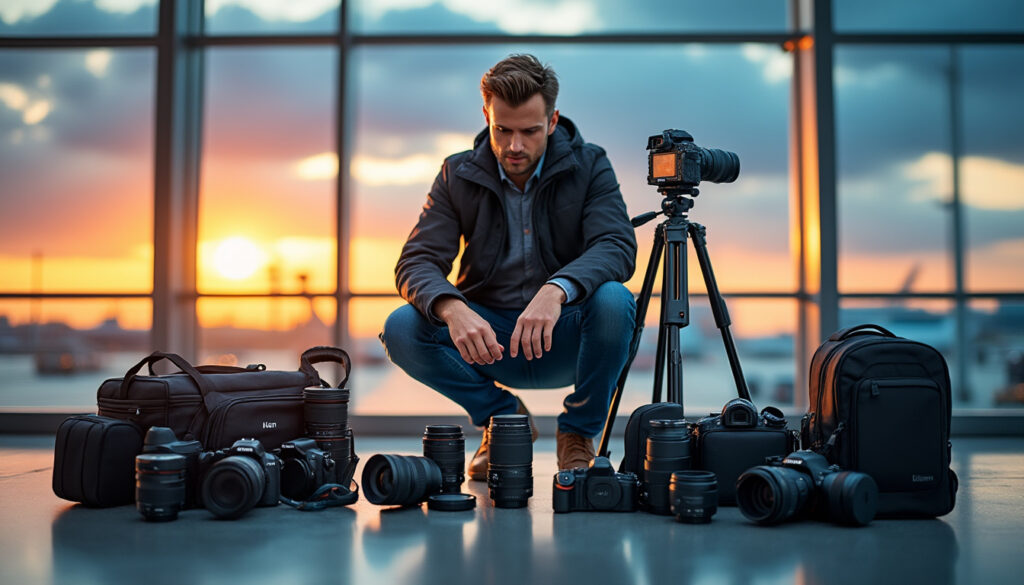
Taking a plane with your photography equipment is an exciting adventure, but it can also turn out to be a real headache. Every photographer, whether amateur or professional, has wondered how they could transport their precious gear while ensuring its safety. Between airport security rules and concerns about the safety of their devices, it is essential to prepare properly before departure. Let’s listen to expert advice and discover all the steps to travel peacefully with your photography equipment.
The security rules regarding photography equipment on airplanes
Before heading to the airport, it is crucial to understand the security rules that govern the transport of photography equipment. Most airlines and airport authorities are very strict about the types of items you can bring in the cabin or in the hold. For example, cameras and lenses, which are both valuable and fragile, must be transported in the cabin. It is also imperative to reserve enough space in your carry-on luggage to avoid any issues at check-in.
To optimize your passage through airport security, it is advisable to keep your equipment well organized. Here’s how to proceed:
- Place all your accessories in an easily accessible pocket.
- Have a camera bag designed for air travel, such as a model from Lowepro or Peak Design.
- Check the weight limits for carry-on luggage according to your airline.
The rules regarding batteries are of paramount importance. In general, lithium-ion batteries cannot be transported in the hold. They must always be in your carry-on luggage, charged and in good condition. Additionally, it is wise to use specific safety cases to avoid any short circuits.
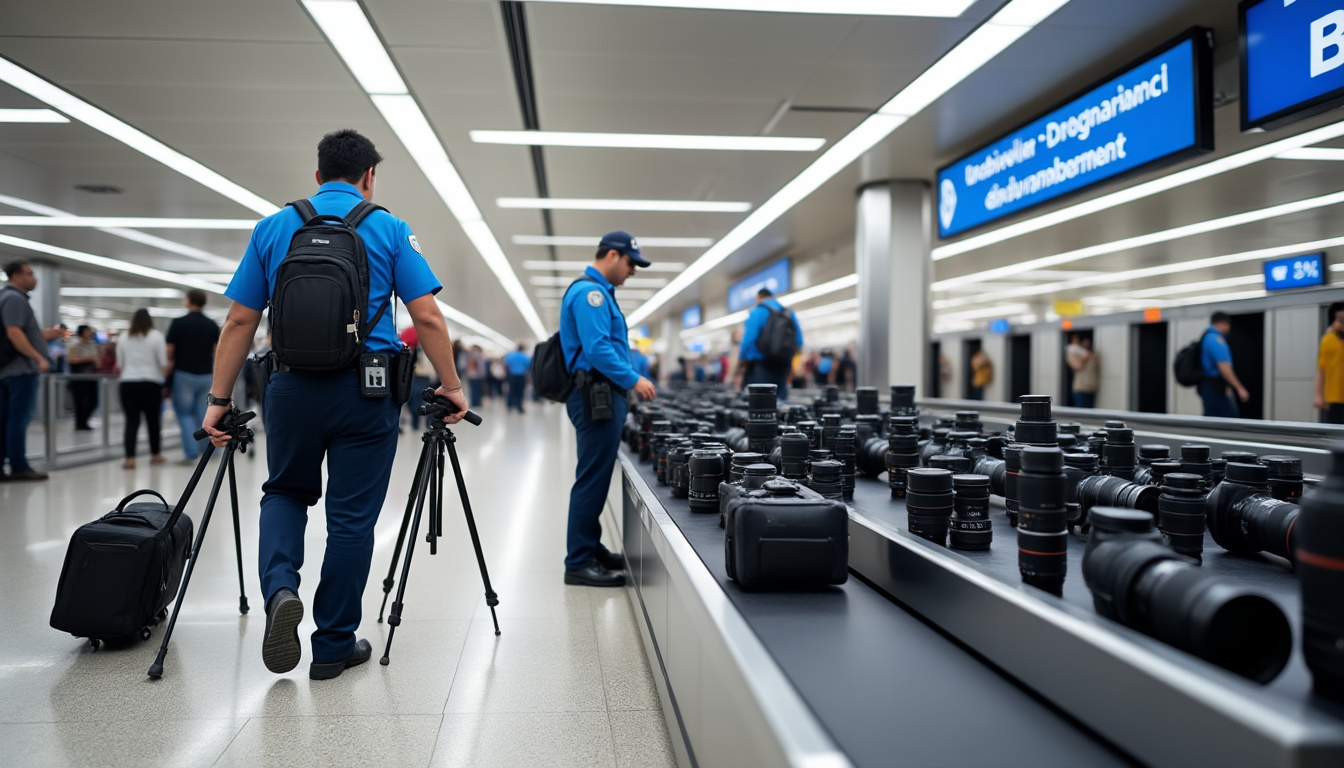
Note that some equipment – such as drones and their batteries – have even stricter regulations. These must also be transported in the cabin. For more information, visit the DGAC website for specific rules regarding drones.
How to choose your photography equipment to take on a trip
When it comes to traveling with your photography equipment, selecting what to bring can make all the difference. Here are some tips to avoid overloading your bag while not leaving behind essential gear. First, ask yourself the right questions:
- What type of photography will you be practicing?
- What is the climate and environment of your destination?
- How much time will you spend photographing?
For a photography trip, it is commonly advised to bring a DSLR or mirrorless camera (such as a Canon or Sony), two to three lenses depending on your needs (wide-angle, telephoto), a compact tripod if necessary, and a laptop for storage and post-processing on the go.
Regarding accessories, don’t forget:
- Polarizing and ND filters.
- Spare memory cards.
- A portable charger.
| Equipment | Use | Notes |
|---|---|---|
| Camera body | Main shooting | Ensure waterproofing in case of rain |
| Lenses | Vary types of shots | Make sure to have a lens hood |
| Tripod | Stability for long exposures | May go in the hold depending on regulations |
| Batteries | Power | Transport in cabin only |
These items should be prioritized based on your specific needs. The goal is to maximize your chances of capturing incredible images while reducing the weight of your bag. When selecting your lenses, don’t hesitate to consider hybrid lenses, which offer comparable image quality in a smaller size.
Camera bag: what criteria to choose well?
A good camera bag is essential for a successful trip. It must ensure the safety of your equipment while being practical to carry. When choosing your bag, consider the following criteria:
- Materials: Choose waterproof materials, especially if you are going to rainy areas.
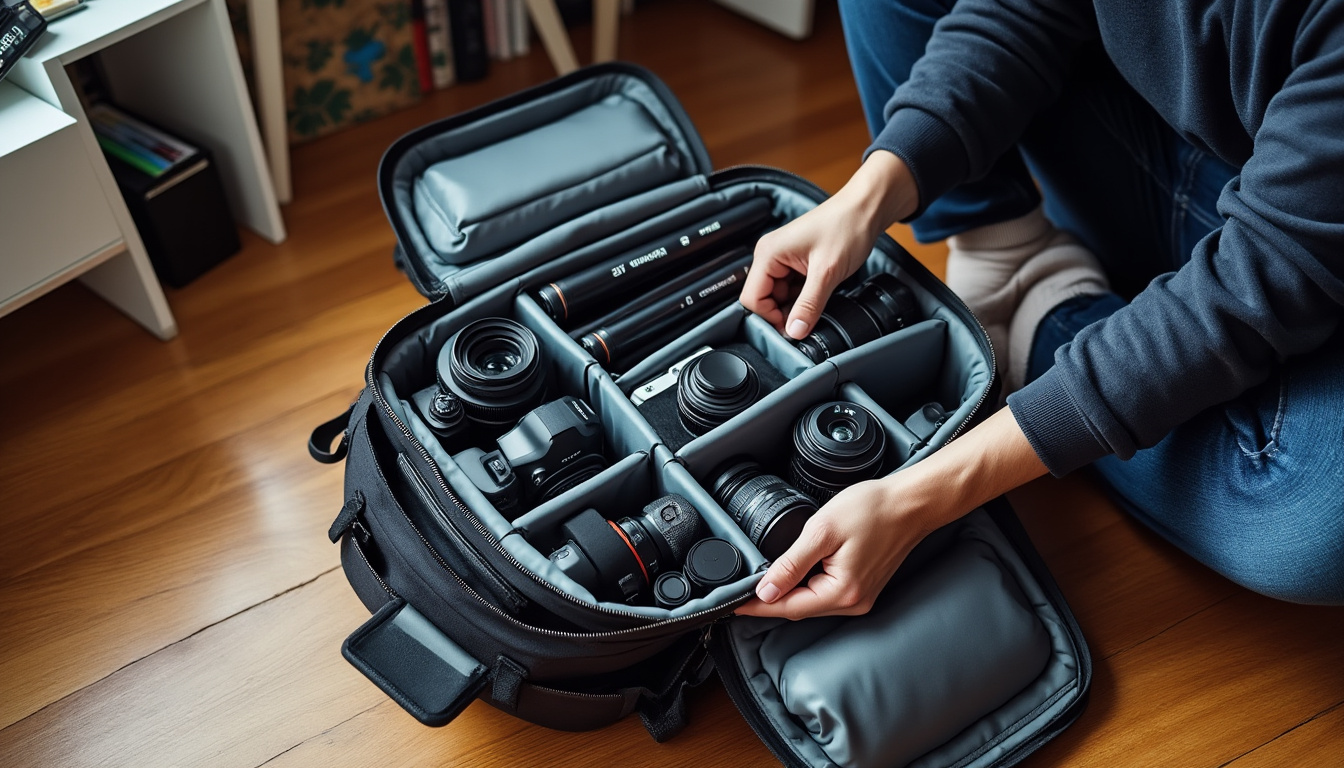
- Compartmentalization: Make sure it has a good divider system to isolate each piece of your equipment.
- Comfort: Check that the straps and back are well-padded for prolonged transport.
Brands like Manfrotto, Vanguard, and Think Tank offer bags specifically designed for photography. For example, the Manfrotto Pro Light has spaces specially designed for DSLR bodies and a sturdy shell for protection.
Finally, check the size of the bag against the weight limits imposed by your airline. An overly heavy bag can cause problems at check-in. Deciding to transport your equipment also means choosing the right bag that combines practicality and safety.
Transporting accessories: tips to know
When traveling with your photography equipment, it is essential to manage the transport of accessories well. Often overlooked, these can also be fragile and expensive. Here are some practical tips:
- Use zip bags to store small pieces like filters and cables.
- For memory cards, choose a dedicated case to avoid loss.
- Pack your tripod separately if you need to transport it in the hold to avoid any damage.
| Accessory | Transport advice |
|---|---|
| Filters | Use a hard case for more security |
| Memory cards | Avoid fragile displays, opt for a hard case |
| Tripod | Remove the head and consider placing it in the hold |
These thoughtful tips ensure that all your equipment arrives safe and sound at your destination, maximizing your potential to capture unique photographs.
What to do in case of problems at the airport?
Despite meticulous preparation, you may encounter problems during your passage through the airport. Whether it’s non-compliant equipment or an overly heavy bag, preparing an emergency plan can make all the difference. Here are some steps to follow:
- Stay calm and polite with the security staff. Explain the nature of your equipment if necessary.
- If an item needs to be removed from your luggage, consider wearing it around your neck or in another pocket.
- Consult a supervisor if you believe you have valid reasons to keep your equipment with you.
In the case of a problem that cannot be resolved one way or another, it may be wise to have your travel insurance contact information handy. Most insured individuals can file claims for loss or damage, as long as you have solid evidence. Always remain calm and keep your photography equipment secure to prevent it from falling into the wrong hands.
Recommended security measures on the plane
Once on board, it is still important to maintain the security of your photography equipment. Turbulence during the flight can pose a danger not only to passengers but also to your gear. Here are some tips to ensure maximum protection:
- Keep your camera bag under the seat in front of you for quick access and increased security.
- Use a cushion or jacket to cushion impacts in case of turbulence.
- Avoid exposing your equipment to the heat from air vents.
| Measure | Explanation |
|---|---|
| Bag under the seat | To prevent falls and damage |
| Cushions or jackets | To avoid impacts during turbulence |
| Heat assessment | To avoid overheating of electronic devices |
By reacting quickly and being proactive, you can travel peacefully knowing that your equipment is safe.
Passing through customs: balancing security and caution
When traveling abroad, passing through customs can be an additional source of stress for those carrying expensive photography equipment. To facilitate this process, there are several tips to consider:
- Take a digital copy of your purchase invoices to prove your ownership.
- Have a customs clearance card for your equipment, which can be easily obtained from customs.
- Be prepared to explain the nature of your equipment if questions arise.
| Tip | Reason |
|---|---|
| Copy of invoices | Proof of ownership in case of inspection |
| Customs clearance card | Official document to facilitate passage |
| Preparation for discussion | Minimize the risk of misunderstanding with customs officers |
These steps can help you avoid complications and questions at customs. Ensuring that you comply with the laws in force in the destination country is also a good practice.
What types of photography equipment can be taken in the cabin?
In general, all cameras, lenses, and fragile accessories must be transported in the cabin to avoid damage.
How can I protect my batteries while traveling?
Batteries must be charged and transported in the cabin, using safety cases to avoid short circuits.
What are the weight limits for carry-on luggage?
Limits vary by airline, but most require a maximum weight between 7 kg and 12 kg.
Is it possible to take a tripod in the cabin?
Normally, tripods are not allowed in the cabin and must be placed in the hold.
How to manage overly heavy equipment at the airport?
If there is a weight issue in the cabin, reorganize your equipment and consider using additional bags to redistribute the weight.